Wednesday, February 27, 2013

“The Lady with the Dog” Reading Journal – The Story of the Man who Resorts to Love


             Chekhov’s short stories can be characterized by “character over plot.” That is to say, the plot originates from the inner force of its characters, and the story line is never imposed for its own sake. With that said, the character to focus on in this particular story, “The Lady and the Dog,” is definitely Dmitri Gurov for it is he and his changing attitudes toward Anna and himself that drive the plot. “The Lady with the Dog” is a rather scandalous story of its time with obvious themes of relationships, adultery, and love. Through a thorough analysis of Dmitri’s character, I want to explore his take on the whole concept of a relationship and speculate on why such a shift of viewpoint occurred on his part. How did the subject of his sexual conquest turn into the love of his life? How did the adulterous affair turn into his liberation? What is love, anyway? Chekhov, being Chekhov, does not give an answer straight out. However, he gives hints and leaves the readers room to interpret.
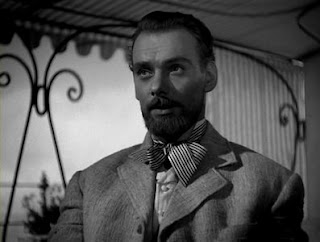
             Dmitri, in the initial part of the story, is drawn out as an unappealing chauvinistic player, hardly winning any favors from us. He is bitter and cynical about women and the world as a whole. We learn from the beginning that he is unhappily married, that he is in his middle ages, and that he indulges in frequent adultery. He enjoys the company of women but avoids getting into a deep relationship. “Every intimacy, which at first so agreeably diversifies life and appears a light and charming adventure, inevitably grows into a regular problem of extreme intricacy, and in the long run the situation becomes unbearable.” It seems that our male protagonist is afraid of getting into deep relationships and dealing with “love.” He wants to keep things simple, which is why he takes up another opportunity to enjoy a “swift, fleeting love affair” with the newcomer of Yalta. He addresses her not as a human being but a label, such as “the lady with the dog” or “the lady in the beret,” reinforcing Dmitri’s viewpoint of women being a temporary plaything that does not need naming.
             However, the journalistic, dry prose of Chekhov turns poetic near the end of section I, giving a hint at how Dmitri comes to feel love for Anna. “They walked and talked of the strange light on the sea: the water was of a soft warm, lilac hue, and there was a golden streak from the moon upon it,” is very poetic. In this paragraph, we learn that Dmitri studied to be an Opera singer but works in the confined regulations of a bank. Dmitri probably feels trapped in his life. It is also the first time we learn the woman by name, Anna Sergeyevna. This hints at the origins of his love as this description describes how both are living unhappy lives and Dmitri calls the “lady” by name. When Dmitri goes back to the hotel, he thinks about her youth, her diffidence and angularity, and her “slender delicate neck, her lovely grey eyes.” He is attracted to her youth and frailty. However, he concludes that there is something pathetic about her, and avoids facing his sprouting love for Anna.
             The recurring image of the sea reinforces the hint mentioned above. In the first mentioning of the sea, Chekhov’s prose suddenly took a shift and it revealed their meaningless lives. The sea comes up once again after Anna’s emotional outburst. Dmitri takes her to the sea, and Dmitri’s reflections are revealed. “So it sounds now, and it will sound as indifferently and monotonously when we are all no more…in this constancy,…, there lies hid, perhaps, a pledge of our eternal salvation, of the unceasing movement of life upon earth, the unceasing progress towards perfection.” Through his thoughts, Dmitri’s hunger for something deeper in life, some meaning in life, is shown. Maybe the lineup of affairs he had was just an expression for a longing for intimacy. The sea also recurs when Dmitri parts with Anna. After he ends the affair almost dispassionately, Gurov astonishes himself by finding love. I believe that the sea, with its constancy and sublimation, helps Gurov find meaning in his life and ultimately come in terms with love. I don’t think Chekhov meant it as a direct trigger for Dmitri to find love, but its recurring images of the sea is integrated with Chekhov’s steady realization of love, and thus the importance of nature in Chekhov’s works. The sea reminds Dmitri and the readers that man lives and dies in obscurity (compared to the sea) and to find " a pledge of eternal salvation." For Dmitri, this eternal salvation was love.

           Another recurring image is the color grey. Starting from the grey eyes of Anna and Starting from the grey eyes of Anna, then the table grey with dust, the grey army cloth, the grey fence, culminating in the greying of his hair. I believe that this recapped readers and the character with the idea of age. We know that Dmitri is in his middle ages, which leads one to think if he’s in a midlife crisis. I think it is safe to say that Dmitri was attracted to Anna’s freshness and inexperience. He was trying to recapture his youth. However, at the end of the story, he recognizes that Anna too will age like him (relating back to her grey eyes), but still he loves her. I believe that this can work to his selfishness. Since Dmitri is aging, his days of easily seducing women are limited. He needs not a string of lovers but one he can grow old with, and Anna, who is so dependent on him and adores him, is the subject of his final love.
             Thus, I think for Dmitri, love is pretty selfish. He comes to terms with genuine love because he wants to find meaning in life (reinforced by the sea) and  because his age (shown through the images of grey) is telling him to settle on one woman. He resorts to what he thinks is “true” love. However, there are some implications that his condescending air has not completely gone. During both of Anna’s emotional outbursts, Dmitri is eating something – a watermelon in the first and tea in the second. However, there are still implications of a bright future, a happy ending, if you will. Ultimately though, the relationship between a man and a woman can never be defined, thus the ambiguous conclusion. 


Wednesday, February 20, 2013

“The Student” Reading Journal: The Strange Mixture of Misery and Joy


Joyce Lee

       While reading the student, I could not help but feel that Chekhov’s use of language evokes much feeling and conveys the emotions of the narrator, Ivan. Chekhov skillfully manages to mix in emotion within his dry, objective, and somewhat journalistic tone. The shift in his descriptions and sentence structure echoes the shift in Ivan’s emotions, which speaks of the main theme of the short story.
       “The Student” starts out with images of desolate bleakness. The description of nature is predominant in the first part of the story. “Something alive droned pitifully with a sound like blowing into an empty bottle,” and “a penetrating wind blew inappropriately from the east,” culminating into a feeling of cheerlessness, remoteness, and loneliness. The language is crude and laconic. The following mentioning of the figures of the past, Ivan the Terrible, Peter, and Rurik arouse the thought that this desolate gloom is a chronic state. It seems to speak of misery as being a integral and perpetual part of human nature. "The same darkness, the same feeling of oppression - all these had existed, did exist and would exist, and the lapse of a thousand years would make life no better." This powerful description of desolation and depression dominates the first part of the story.

       Then, right after this bleak introduction and insight into the misery of humans, Ivan encounters two widows and tells them of the (rather simplified) Biblical narrative of Peter and Jesus. Religion was a dominant factor in 19th century, and it seems that after being depressed after his rather dooming insight, Ivan and his young 22-year-old self wanted to relate and share the suffering of the past with someone. To gather sympathy of the bleakness of life? To garner reverence for his knowledge? Perhaps. But what he gets is an emotional outburst from the two women. This response from the widows ignites joy from Ivan, as powerful as the depression portrayed in the beginning of the story. The rhythm of the language brings out this happiness of the student who learned something new - the response and connection of those suffering in the present to those who suffered in the past. The last paragraph is composed of one thick paragraph, with thoughts flowing freely from the river by the ferry to the chief thing in human life in a single sentence, Ivan excited to share his discovery. There is no evident logic and the last paragraph gives an ambiguous conclusion but it hopes for a happier future.
      Chekhov mingled the past and present by the subtle parallelisms of Peter's betrayal and the setting surrounding the two widows. As he shows, sufferings and misery are indeed constant. However, they also have meaning and significance enough to evoke emotions in the present, which makes suffering have some meaning and significance. This rather strange, somewhat paradoxical theme continues on to the language of the conclusion. The last paragraph juxtaposes the ominous image of the "cold, crimson sunset" and a beacon of hope, the "narrow streak of light." Chekhov said that "The Student" was his favorite "optimistic" work. The final notes of the story focus not on the coldness and dejectedness of the suffering, but resound of enchanment, happiness, and beauty. Apart from whether this story is realism or not, Chekhov's mastery of language to convey a deep message about of suffering and joy itself is simply amazing.


Thursday, May 24, 2012

Catcher in the Rye - Holden and little James

Introduction: This passage is based on chapter 10 where Holden decides to go the the Lavender Room in the hotel he's staying and digresses into talking about his little sister Phoebe. This Holden is inside KMLA putting on a clean shirt to go to the cafeteria and describes his little brother James. The character James is largely based on my own little brother and I'm idealizing him like Holden does with Phoebe.
           I didn’t have much to do. I had to write this essay for some teacher, but it wouldn’t take long. The one thing I hate is being all studious when you don’t have much to do. So I went to the closet, took out a decent-looking shirt, and I went in the bathroom and washed and changed my shirt. What I thought I’d do, I thought I’d go upstairs to the cafeteria and see what the hell the people were doing. There was always some hooligan throwing some goddam act in the cafeteria.
           While I was changing my shirt, I damn near gave my kid brother James a buzz, though. I certainly felt like talking to him on the phone. Somebody with sense and all. But I couldn’t take a chance on giving him a buzz, because he was only a little kid and he wouldn’t have been up, let alone anywhere near the goddam phone. I thought of maybe hanging up the phone if my parents answered, but that wouldn’t have worked either. They’d know it was me. My mother always knows it’s me. You never get away with anything with my mother. But I really felt like shooting some crap with little James for a while.
           You should see him. You never saw such a sweet little kid. He’s really smart. I mean he’s had all A’s ever since he’s started school. When he was just a four-year-old puny little ball of skin and hair, he’d be drawing these pictures of meadows and barns that just about killed you. As a matter of fact, I’m the only dumb one in the family. Even my parents are pretty damn smart with degrees and all. I’m the only really dumb one. But you ought to see little James. I sometimes call him Jamsieboo just for the hell of it. But he doesn’t throw a fit like other kids do when you call them names like Jamsieboo. It’s real nice and all. He has this sort of coarse black hair that was cut really short because he tried cutting his own hair and messed up. It wasn’t weird or anything though because he has a nice little round head. It’s probably longer now. My mother sometimes waxes it on special occasions. But it’s nice either way. He’s only ten. He’s quite plump. But a nice plump. A blueberry-plump. I watched him once from the window when he was playing in the backyard. He would be running around the shrubs mimicking birdcalls, and that’s what he is, blueberry-plump. You’d like him. I mean if you tell little Jamesieboo something he really listens to you. He doesn’t pretend to listen and think of something else like other phonies do. I mean you can tell him about all the phony assignments the school makes you do here and he’ll look right into you eyes and sympathize. Really sweet kid that James. He once came to the school that’s secluded in the north and surrounded by mountains. That’s probably the only decent thing in the school. The mountains. He loves nature. It just about kills him. He can name all the trees up here, I’m not kidding. He can tell the difference between a birch and a larch just by looking at the bark. He’s always saying that if he was ever born again, he would ask God to make him a tree. A kid saying that, it kills me. He’d take my hand and start telling me all the trees and birds he’s been drawing and if he could come visit often to draw me in the trees. I’d tell him yeah he could. He knew that I was lying though. And his eyes became all droopy and sad. Those big doe eyes. He can get very emotional sometimes. I mean for a boy. And something else he does is he reads these books over and over again. Only they’re fantasy books with dragons and adventures. The books are all tattered and folded and I tried to get him to read other books, but he still reads them. I could read him a sentence and he’ll know exactly what chapter it is on and his eyes get all sparkly and bright when he talks about what’s happening in that particular moment. If it’s a part he really likes, he gets up and starts acting the scenes out. That just kills me. Little James. I swear to God you’d like him. He’s ten now and not such a tiny little kid any more, but she still kills everybody – everybody with any sense, anyway.
           Anyway, he was somebody you always felt like talking to on the phone. But I was too afraid my parents would answer, and then they’d find out I wasn’t doing that essay and probably throw some goddam fit. So I just finished putting on my shirt. 

Friday, December 9, 2011

SAT writing practice

Prompt: Is creativity needed in the world today? 
           It is the 21st century, and the world is relatively stable due to the increased standard of living. So now, due to this stability, the masses scream for new, innovative ideas, products, anything. That is to say, creativity is an asset that makes a person or product stand out and survive in the world of competition and create something of value.
           To begin with, consider Steve Jobs, the CEO of the renowned company of Apple. Steve Jobs was a person not afraid to take risks and was innovative and creative with his ideas and put those creative thoughts into action, creating the company Apple that produces many revolutionary products that is well-accepted by the masses. Steve Jobs was not the inventor of the computer or laptop or an operative system…but he was creative. He saw where the pre-existing Microsoft Inc. lacked and decided to make it better using his creativity. Steve Jobs has always placed a great importance of creativity, saying that in this world creativity, or the lack thereof, can make you or break you. Therefore, due to Steve Jobs’ philosophy and ideas, Apple is currently dominating the consumer sentiment and is leading the way for other similar innovations to come. Therefore, the example of Steve Jobs shows that perseverance, hard-work, talent, while important, is not enough and that creativity makes the difference.
Moreover, consider the example of Pixar, a computer animation film studio that clearly shows that creativity is an important factor to success in today’s world. Pixar fosters creativity within their company to create a world of imagination, fantasy, and wonder for their audiences. For example, Pixar creates an environment where everyone is free to express their ideas and incorporate all those ideas into creating something of value. The people of Pixar work by the philosophy that a single idea means very little and that it takes thousands of good ideas in order to produce anything of importance. Therefore, everyone is safe to say what they think and there are no barriers between different statuses within the company. As a result of this free and idea-centered environment, Pixar produces a great story that appeals to many and stands at one of the world’s top animation studios, with the recent movie Toy Story 3 becoming the highest-grossing animated film of all time worldwide. Thus, I believe that it is safe to say that creativity is needed in this world, for it leads to a creation of value.
           Thus, the example of Steve Jobs and Pixar substantiate the notion that creativity is much- needed in today’s society. In this world, creativity is the deciding factor to create success as well as a better world for all. 

Wednesday, November 23, 2011

Back-and-forth Game -Mr. Moon Assignment

I was crying uncontrollably. I was surrounded by aliens. There were creatures with blue and green eyes, and red and blonde hair, completely different from the brown-eyed and black-haired people I was so used to. They were calling out to me in a strange language that I could not understand and I wanted desperately to go home and back to safety…That was my view of American preschool. As a four-year-old starting preschool in America, I was petrified. Unfortunately, this situation occurred quite often in my lifetime. I moved back and forth between Korea and America, constantly forced to face two completely different environments and adapt accordingly. For me, it was a nightmare. Just as I was feeling like I belonged, our family moved back either to Korea or America. Life has always been like this – back and forth, back and forth, never staying in one place for too long. I longed for a sense of belonging, and I guess that was the game of my life – to live a life in two countries and find somewhere I belong.
I hated my back-and-forth life. It was like a rocking horse, moving from here to there, here to there. I had to go through the same routine every time. I am plunged into a completely new environment in a different country. I try my hardest to fit in. I study twice as hard to receive better grades than my peers and boldly approach strangers to make friends. However, just as I am getting used to life, I move and am faced with another completely different environment in a new country. As hard as I tried, I always felt like an outsider. I felt different from the rest my peers. It was a feeling deep inside that I could not easily explain. I was too Korean to be American and too American to be Korean. I did not know who I was or where I belonged. I resented this life that was making me an outsider and harbored a grudge against my father’s job that caused our family to move from country to country. I moved back and forth into two completely different cultures of America and Korea, starting my life over and over again. It was a tiring and difficult game with many obstacles, but I had to play it nevertheless.
I decided to change my strategy of playing the game. I soon realized that it was futile to lament something that was never going to change just like the steady rocking of the rocking horse is never going to change. Therefore, although it was difficult at times, I tried to look at my life in a more positive light, and suddenly, my life was not so bad anymore. I could see myself beginning to adapt to both worlds at a rapider pace and, little by little, gained confidence in myself. Then, as subtly as a bruise appears, I was a changed person. I became a person that does not give up easily during hardships, a person that fluently speaks both Korean and English, and a person who could understand both Korean and American culture. All of my merits are results of the back-and-forth game I played. I realized that I could belong in both worlds as a Korean in America and an Americanized Korean in Korea. Right now, I am setting my roots in Korea in Korean Minjok Leadership Academy, so I can present myself as a proud Korean when I become someone who will have, not only Korea, but the world as her stage. I now know that playing this difficult game subtly and elegantly shaped me into the character I am today.
I did not choose to play this game of life, but in the end, I found what I wanted. I found that, with my roots in Korean nationality, I could belong anywhere. I now do not think myself as an outsider, but a person who was lucky enough to experience two countries to a great extent. This game was as unchanging and steady as a child’s rocking horse and was subtle as a bruise in shaping who I am. Now, knowing what I know, if I was back at that preschool as a little four-year-old girl, instead of crying uncontrollably, I would probably have a bright sunny smile on my face.


Sunday, November 20, 2011

Review of Pranav Mistry's TED video


           Frankly speaking, I’m a technophobe. Machinery, gadgets, digital-anything, i-anything are really not my area of expertise. A girl that’s so bold and zealous at everything becomes so small and tentative when it comes to any techy-device. I know what you’re probably thinking: caveman, out-of-date, incongruous. Yeah, I’m still learning. I guess I haven’t opened my eyes to the prodigious and auspicious aspects of technology yet. However, there was one video that I saw recently that instigated my fascination for technology – a TED video of Pranav Mistry’s “The thrilling potential of the SixthSense technology.”
Basically, what the speaker Pranav Mistry is aiming for is the assimilation of the digital and real world. It was indeed jaw-dropping. Mistry was the kind of person who put his abstract thoughts into tangible actions, which I revere highly. He was skeptical of the status quo of the world and thought in a novel perspective, reaping eccentric and unprecedented ideas and devices. According to his presentation, he asked himself, “Rather than using a keyboard and mouse, why can I not use my computer in the same way that I interact in the physical world?” and he goes on to explain about his exploration of this question and the resulting gesture-interface device made out of his mouse with his own diligent labor. Mistry continued experimenting and making other devices in the same process of questioning “Why not this?” then investing his time to satiate this question, and he made a sticky-note integration system, a pen that can draw in three dimensions, and a cool device where you can find information on an object by putting the object on an interface rather than just typing in a keyword. 
           Until this point, Mistry put his objective into taking a part of the world into the digital world. But he reversed his thinking and again asked himself, "Why can I not take the approach in a reverse way?" and the resulting SixthSense device is laudableIf you think of it, the digital world is confined into a gadget that fits in our pockets. Minstry's device removed this confine and released the digital world into our real, physical world. To borrow some of his own words explaining the device, "The most interesting thing about this particular technology is that you can carry your digital world with you wherever you go. You can start using any surface, any wall around you, as an interface. The camera is actually tracking all your gestures. Whatever you're doing with your hands, it is understanding that gesture." Now the applications of the resulting SixthSense device is not having to get out your camera in order to take pictures, but just make a gesture of taking a picture with your hands and there you have it. Also, you can make a phonecall using your palm as an interface, you can see reviews of a book just by holding it in your hand, you can extract information about people just by looking at them...the applications are incessant and engenders amazement and wonder.
            Now, I guess this novel technology provokes the question, "Is this assimilation necessary?" Many might think that for a technophobe like me, this integration of the digital and physical world will scare me. In a way it does. The side effects of an innovation like this will be huge, far-reaching, and long-lasting, and thus cannot be ignored. Pragmatically speaking, I do not think that this device will ever reach the hands of the public in fear of misuse. Nevertheless, regardless of whether the public can use it or not, the capacity of human imagination and actually converting that imagination into reality is to be extolled. This innovation is amazing and opens countless possibilities. Even for a technophobe, I believe that this invention is worth knowing more about. The reason why I am not good with machines is that I have to learn the language of the digital world to work these things. I have to be familiar with the gadgets, all those buttons, the icons, etc, but if the digital world was removed of its "gadget-confine" I would be able to use it with less hindrance. I won't have to switch back and forth with the two worlds. Humans invented technology to enhance the physical world. But at the present stage, the technology is replacing physical interactions and artifacts with digital ones, such as e-book, MSN, social networks etc. In his innovation, Mistry is striving to make connections between the digital and physical world. It is a step forward.
             I saw wonders and perhaps a glimpse of the future in Mistry's TED video. Just browsing through TED videos makes me content to see that there is not a paucity of human imagination, inspiration, and creation in the world today. Mistry clearly showed viewers his intentions of integrating the digital and physical world by presenting his various experiments with everyday objects. At first, it was to satiate his curiosity, but now he has intentions of sharing it with others to make the world a better place - a place "where people don't end up being machines sitting in front of other machines." But until then, I monotonously hit the buttons of my keyboard to write this review...and I probably have to ask someone how to embed a TED video in a blog post!


Reference:
John Miedema, Seamless integration of digital and physical spaces http://www.teleread.com/paul-biba/seamless-integration-of-digital-and-physical-spaces-by-john-miedema/
Paul Biba, Marketers begin integrating physical and digital worlds http://blog.joelrubinson.net/2011/07/marketers-begin-integrating-digital-and-physical-worlds/
Pranav Mistry, The thrilling potential of the SixthSense technology http://www.ted.com/talks/pranav_mistry_the_thrilling_potential_of_sixthsense_technology.html

Sunday, November 13, 2011

Ola Restaurant Review

            It’s just around dinnertime. The sky hints at darkness and the nighttime chill of the lakeside is carried in the wind. The road weaves and turns along the lakeshore, and the car finally takes a turn into a car-filled driveway. The plank card marking the driveway reads “Italian Restaurant Ola!” but doesn’t scream at passersby “Come eat at our restaurant! Come buy our food!” like most other restaurants around the Baekun Lake. In fact, a modest glow is all it takes for cars to fill the parking space in front of the humble Italian restaurant, Ola.


           The history of Italian food in Korea is not particularly distinguished. Frankly speaking, I think it’s despicable. Yes, there are a lot of restaurants that offer dishes that are both innovative and delectable within the scope of Asian cooking, but go across a few more seas, and the Korean chefs just don’t seem to get it right. However, in this peaceful lakeside on the small city of Anyang, a pleasant surprise awaits spaghetti lovers who believe that Korean chefs can’t manage Italian or any European cuisine.
           There’s a sort of formal ambience to this restaurant. The typical sweater and sneakers seems out of place and semi-formal attire seems most suitable. If you get over the fact that the overall atmosphere is more France than Italy, the décor and service complement each other quite nicely. From the valet parkers outside the restaurant to the penguin-suited waiters, everyone’s very formal about the whole occasion. But the one thing that seems to distract the overall ambience of the restaurant is the view from the tables. The building’s walls are covered with glass to reveal the outside landscape. A lake view would be stunning and add the finishing touches to creating the formal and classy atmosphere of Ola, but all the glass-covered walls reveal are the trees lining the road outside. While it isn’t hideous (actually in the spring the cherry blossoms are quite lovely), a lake view while dining is tempting.
           What is more interesting is the food. I admit, Ola is not the kind of restaurant that innovates and experiments with different types of food, but the taste is unparalleled. Like most Korean restaurants, the preliminary course is bread. Not those mass-produced ones they give out at Outback, but real bread. Garlic bread, just out of the oven, crispy, soft, and warm. Maybe a little too big to be the wee little food before the actual meal, but I consume them with no complaint. The appetizer I recommend is the Zucca soup, pumpkin soup served in a pumpkin. Dulcet, mellow, nectarous, sapid would all be words describing this soup. The rich saffron color implies the richness of its taste. A thick soup with a full yet soft taste that spreads into my mouth much to the joy of my taste buds. The sweetness of the soft chunks of pumpkin harmonizes beautifully with the creamy taste of the soup, and the little bowl is scraped clean. 


            Perhaps the best dish is the C-cucina, a seafood cream spaghetti with pizza bread on top. The waiter cuts the bread open and the inside is revealed. The fresh, various seafood steams inside a soup of creamy whiteness. The cream sauce is the deciding factor of the excellence of the dish. An aroma of sesame seeds being roasted fills the air, and the cream augmented with melted mozzarella slides through my tongue leaving a trail of sleek and clean taste, not too greasy and not too strong. A nice dish to go with the C-cucina is the Crossante, a fusion dish of Korea and Italy. The flavorful tomato sauce has a hint of pepper, creating a spicy taste, which is an unexpectedly delicious mix, in my opinion. On the bottom of the dish, there's a floor of brownly cooked rice made juicy by the spicy tomato sauce. The combination is heavenly, a successful case of fusion. 


          Ola, with its increased popularity, opened in 5 other places in Korea. I've been to some, such as Ola2 and 3, but I find myself heading toward the original Ola. The other branches may have a better atmosphere, but the food itself is at its best in the original Ola. Ola has its eccentricities such as the fusion Crossante dish, but it mostly has its pleasures. After I ate Ola's spaghetti, it's pain to eat spaghetti at another restaurant. 
★★★☆☆